A teaspoon and a tablespoon might sound similar when you’re reading a recipe quickly, but mixing them up can make a big difference.
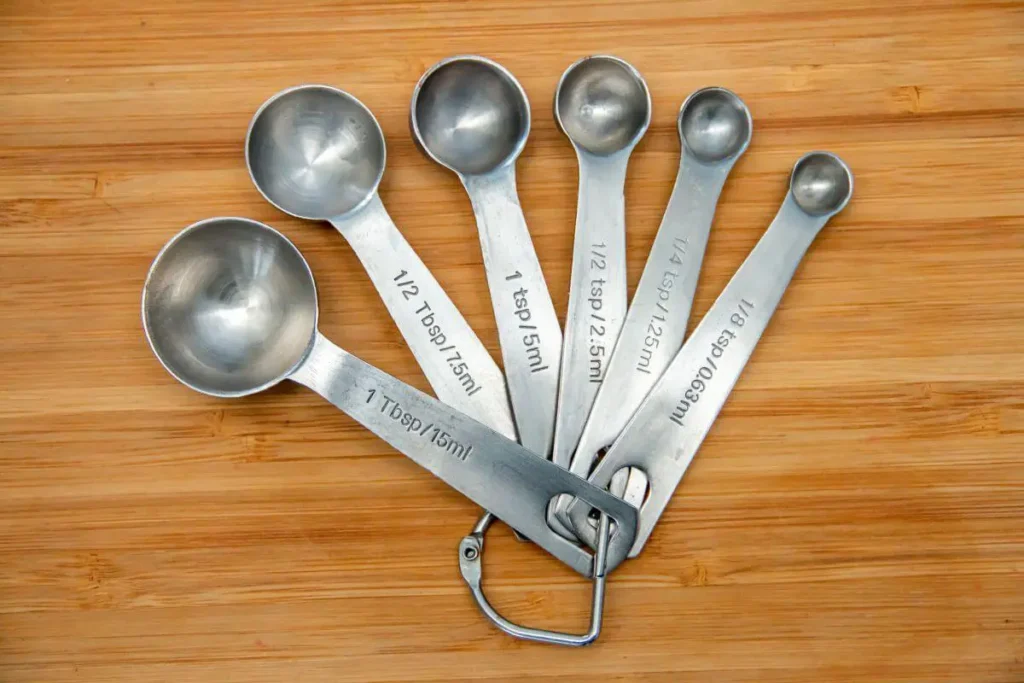
For the UK metric cooking measurements used in this chart, one teaspoon is 5 millilitres and one tablespoon is 15 millilitres. That means three teaspoons make one tablespoon.
Use marked measuring spoons rather than ordinary cutlery, which varies in size.
Kitchen measuring-spoon chart
| Measure | Millilitres |
|---|---|
| ¼ teaspoon | 1.25 ml |
| ½ teaspoon | 2.5 ml |
| 1 teaspoon | 5 ml |
| 2 teaspoons | 10 ml |
| 1 tablespoon | 15 ml |
| 2 tablespoons | 30 ml |
| 3 tablespoons | 45 ml |
| 4 tablespoons | 60 ml |
tsp means teaspoon. tbsp means tablespoon.
Should the spoon be level or heaped?
For a level spoon of a dry ingredient, fill the measuring spoon and sweep a straight edge across the top.
A heaped spoon contains an extra mound. The amount depends on the ingredient and the size of the heap, so it is less precise.
Follow your recipe’s wording. For recipes using standard measuring spoons, a spoon measure generally means level unless stated otherwise.
Does one tablespoon always weigh 15 grams?
No. Millilitres measure volume—the space an ingredient takes up. Grams measure mass.
A tablespoon of flour and a tablespoon of honey occupy a similar volume but do not weigh the same. Use kitchen scales when a recipe gives quantities in grams.
Check recipes from other countries
Not every country uses the same tablespoon convention. Australian recipes commonly use a 20 ml tablespoon, while UK metric recipes use 15 ml. Check your recipe and the markings on your measuring set before converting.
Quick kitchen challenge
How many teaspoons make two tablespoons?
Answer: six, using the 5 ml teaspoon and 15 ml tablespoon in this chart.
Further reading: cooking measurement equivalents from NHLBI and Sunbeam measurement guidance.
