
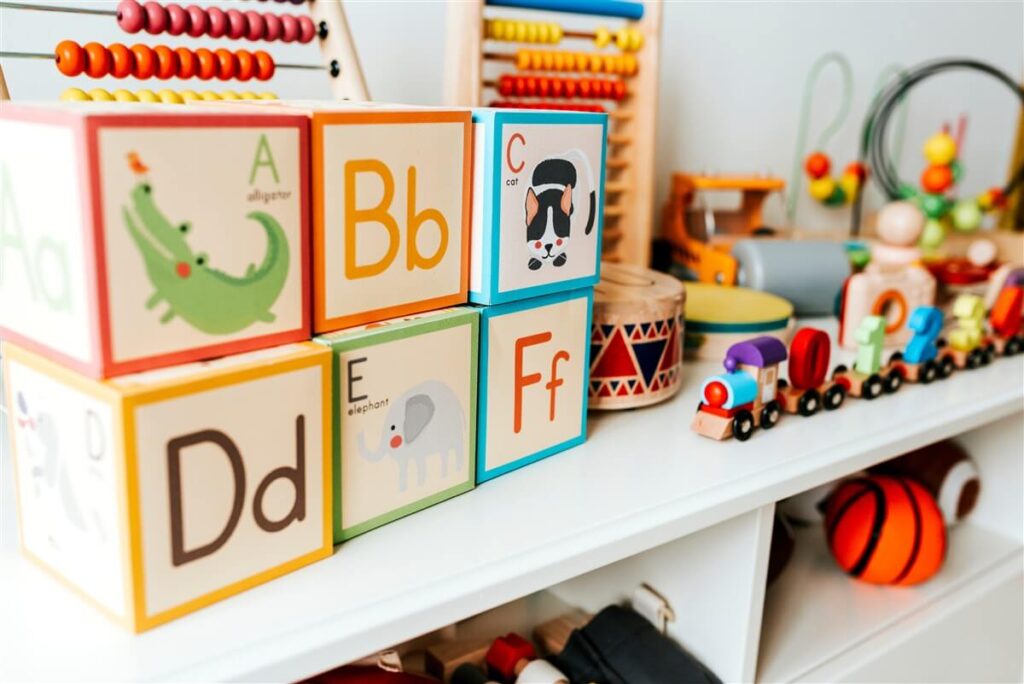
If a toy only fits in its box after an adult has carefully rearranged everything, that box may not be doing its job. Useful toy storage starts with what a child can find and put away, rather than how tidy a shelf looks in a photograph.
Choose one troublesome area first: a heap of building pieces, the books beside the bed or the toys blocking a walkway. You can test a different arrangement with containers you already have before buying anything.
Start with one small collection
Empty one basket onto a clear surface with your child. Sort it into things used often, things to keep elsewhere and things an adult needs to check. Put incomplete sets together rather than throwing away loose pieces immediately. Set damaged items aside for an adult decision.
Ask which toys your child wants to be able to reach tomorrow. Keep familiar favourites available; do not hide a comfort object as part of a tidy-up. Avoid turning the exercise into a surprise clear-out of belongings that matter to them.
Give each group an obvious home
Use broad groups that make sense to your child, such as vehicles, animals or drawing supplies. Too many tiny categories can make putting things away harder. Leave enough spare room for a child to return an item without careful packing.
A picture label can help a child who is not reading yet. Draw a simple car on the vehicle box or use a photograph of its contents. Put labels where they can be seen when the containers are in place.
Keep everyday play at a comfortable height. Store heavy items low, follow furniture anchoring instructions and keep doors, windows and routes through the room clear. Check lids and containers for trapping risks. Small pieces and plastic bags need to stay out of reach of children who might put them in their mouths.
Make a place for unfinished play
A model or pretend scene may represent a lot of work. Agree one safe place where something can stay until tomorrow, such as a tray on a low surface. Explain the boundary before tidying: this tray can stay, but the walkway needs to be clear.
If a construction cannot remain in place, offer to photograph it before taking it apart. Let your child decide whether that would help. Do not promise that every project can stay indefinitely.
Try a gentle rotation if it helps
If there is more than the room can comfortably hold, keep some less-used toys in a clearly labelled adult-managed store. Ask your child what they would like to swap back in. There is no required number of toys or weekly rotation schedule.
Rotation is optional. If looking for a stored toy repeatedly causes frustration, reconsider the arrangement. The useful test is whether the room works better for your family.
Copy this storage plan
| Collection | Its home | Label | Who helps? |
|---|---|---|---|
| Building pieces | Low open basket | Drawing of a block | Child sorts; adult checks small pieces |
| Current books | Accessible shelf | Book picture | Choose together |
| Unfinished project | Agreed tray | Keep until tomorrow | Review together |
Replace the examples with the things in your room. After a few days, check which items still end up on the floor. Move their storage closer to where they are used, simplify the category or make more room in the container.
Finish a play session with a specific shared job: “You put the animals in their basket while I gather the pencils.” Find more practical ideas in our family resources.
